

Fight the Fracture-IOF Survey 2017
Background and Methodology:
Fight the Fracture, a public education campaign, aims to empower patients who have suffered a fragility fracture and their caregivers to proactively seek medical professional help in secondary care prevention ‒ the prevention of a subsequent fracture. The campaign will provide them with educational information, tools and resources. With this support in place, we envision patients will have a better understanding and awareness of fragility fractures and a common underlying cause, osteoporosis. Our goal is to encourage them to take the necessary steps to initiate a conversation with their doctor toward improved, proactive management of their condition.
Supported by the International Osteoporosis Foundation and Amgen, the Fight the Fracture-IOF Survey 2017 was conducted in June 2017, through interviews with 400 patients who have suffered a fragility fracture across five Asia Pacific countries/territories – Hong Kong, Japan, Singapore, Taiwan and Thailand. All patients surveyed had suffered a fracture within the last two years and are aged 60 or older.
Key Findings:
A Failure to Connect
New survey shows patients in Asia Pacific fail to recognise that their fragility fracture is due to osteoporosis and miss the opportunity to prevent another fracture.
- Nearly half of patients who have suffered a fracture do not know that it is a warning sign for osteoporosis.
- Almost 40% of patients were not sure, or did not believe that they are at risk of having another fracture, whether at the same or different site.
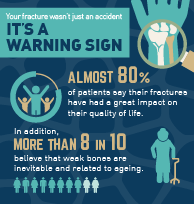
- Although a majority of patients (78%) claim they know what osteoporosis is, over 80% of patients believe that weak bones are an inevitable feature of the normal ageing process.
- Nearly one-third (29%) of patients did not discuss fracture prevention and osteoporosis, the underlying cause, with their doctor.
What’s the Danger?
- Almost 80% of patients say their fractures have had a great impact on their quality of life.
- Almost three quarters (74%) of patients in Asia Pacific who have had a fragility fracture say they are worried or very worried about breaking another bone.
The earlier the diagnosis, the better
- 3 out of 4 (75%) of patients with early diagnosis of osteoporosis agree it was key in preventing another fracture.
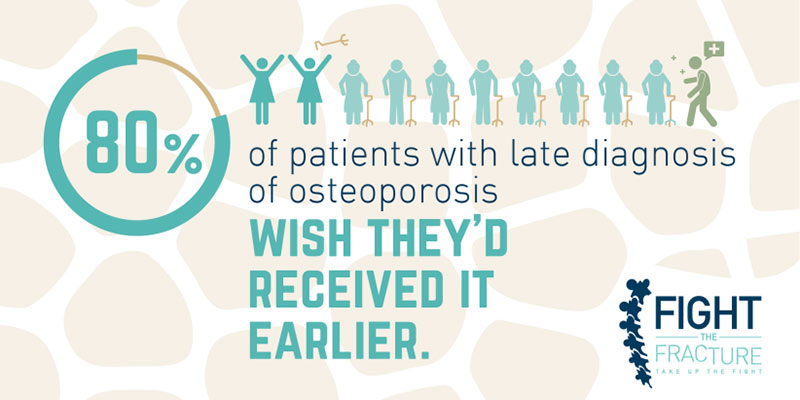
- 4 out of 5 (80%) of patients with late diagnosis of osteoporosis wish they had received it earlier as they feel they would have benefited from it.
- Country-specific findings:
Hong Kong- 66% of patients with fragility fractures believe that their fall was the sole cause of their fracture.
- More than 8 in 10 believe that weak bones are inevitable and related to ageing
- 94% of patients have experienced a great impact on their quality of life due to their fracture.
- 98% of patients are worried or very worried about breaking another bone.
- Nearly half of patients with early diagnosis of osteoporosis agree it was key in preventing another fracture.
- Two-thirds of patients with late diagnosis of osteoporosis wish they had received it earlier.
Japan- 78% of patients with fragility fractures believe that their fall was the sole cause of their fracture.
- 83% believe that weak bones are inevitable and related to ageing
- Almost half of patients have experienced a great impact on their quality of life due to their fracture.
- 49% of patients are worried or very worried about breaking another bone.
- 70% of patients with early diagnosis of osteoporosis agree it was key in preventing another fracture.
- Almost one-third of patients with late diagnosis of osteoporosis wish they had received it earlier.
Singapore- Nearly half of patients with fragility fractures believe that their fall was the sole cause of their fracture.
- More than 7 in 10 believe that weak bones are inevitable and related to ageing
- 74% of patients have experienced a great impact on their quality of life due to their fracture.
- 42% of patients are worried or very worried about breaking another bone.
- 62% of patients with early diagnosis of osteoporosis agree it was key in preventing another fracture.
- 89% of patients with late diagnosis of osteoporosis wish they had received it earlier.
Taiwan- More than 1 in 5 patients with fragility fractures believe that their fall was the sole cause of their fracture.
- More than 8 in 10 believe that weak bones are inevitable and related to ageing
- 80% of patients have experienced a great impact on their quality of life due to their fracture.
- 84% of patients are worried or very worried about breaking another bone.
- 62% of patients with early diagnosis of osteoporosis agree it was key in preventing another fracture.
- 84% of patients with late diagnosis of osteoporosis wish they had received it earlier.
Thailand- More than 1 in 5 patients with fragility fractures believe that their fall was the sole cause of their fracture.
- More than 8 in 10 believe that weak bones are inevitable and related to ageing
- 100% of patients have experienced a great impact on their quality of life due to their fracture.
- 97% of patients are worried or very worried about breaking another bone.
- 99% of patients with early diagnosis of osteoporosis agree it was key in preventing another fracture.
- 96% of patients with late diagnosis of osteoporosis wish they had received it earlier.

